Reeling in Value: How Fishing Fuels Kei Mouth’s Economy
Over the past couple of years, Kei Mouth Tourism has worked to highlight the activities that draw visitors to the area. From the weekly Parkrun to regular golf tournaments, bowling competitions to beer festivals, we’ve covered a wide range of attractions — yet one remains largely overlooked: fishing.
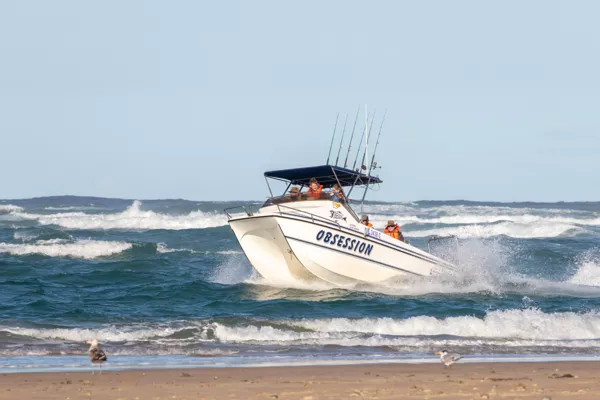
When you consider the number of people devotedly dotting our shoreline this Christmas, it quickly becomes clear just how popular recreational fishing is, and that’s without even factoring in the many Kei Mouth Ski Boat members and their deep-sea fishing activities.
Catch of the Day: Big Numbers, Bigger Impact
According to a paper released in 2021, recreational fishing is “one of the world’s most ubiquitous pastimes, with estimates of global participation of up to 700 million” (Cooke & Cowx, 2006). Given numbers like these, it stands to reason that the sport has a considerable economic impact.
In South Africa, recreational fishing is indeed associated with high spending patterns, particularly in categories such as food and beverages, transport, and accommodation — all of which contribute significantly to local tourism economies.
Compared to other countries, expenditure on recreational fishing in South Africa is notably high, contributing approximately ZAR 18.9 billion per annum to the national economy. Without it, experts suggest there would be a substantial drop in production, income, and employment.
Fishing at the Heart of the Wild Coast Community
In areas like Kei Mouth, where the Ski Boat Club has approximately 170 members, the economic impact of fishing extends beyond tourism and nestles itself firmly into the heart of the community.
Estimates suggest that many Kei Mouth Ski Boat members purchased property in the area primarily because, as stipulated by the club constitution, “a boat-owning member must either own property or be permanently resident in the Great Kei Municipal area.”
Not only do these members contribute in much the same way as visitors who come to the area for recreational fishing, but they also invest heavily in equipment — from rods, reels, and tackle to electronic gear such as fish finders, GPS devices, and VHF radios, to name just a few.
Unfortunately, with few local outlets supplying this kind of equipment, much of this investment is currently spent outside the immediate region.
All is not lost, however. These same Ski Boat members regularly purchase fuel — ranging from 120 to 200 litres per trip — as well as staff to clean their vessels, beverages, groceries, hardware, bait, entrance fees, fishing licences, and launch permits.
That’s before even considering the indirect value added to the community through job creation, increased demand for local services, and the wider economic ripple effect that comes from sustained boating and fishing activity in the area.
The Future Of Recreational Fishing On The Wild Coast
Seeing the Ski Boat Club finally secure its own clubhouse marks a new phase in the organisation’s development — one that we hope will see it grow in both size and influence. At present, nearly all those engaging in recreational fishing activities on the Wild Coast are either residents or domestic tourists. However, the potential to attract intentional visitors seeking a taste of what our seas have to offer is considerable.
With its Green Coast status reinforcing Kei Mouth’s position as an ecotourism destination, and operations such as Great Kei Adventures and Wild Coast Charters increasing the area’s visibility, Kei Mouth is steadily emerging as a fishing destination for international visitors as well.
So, while both coastal and deep-sea fishing activities already contribute significantly to the local economy, their capacity for growth remains substantial. Importantly, this growth aligns closely with the aims of WESSA’s Green Coast Initiative, particularly as catch-and-release practices become more widespread.
According to one study, those participating in recreational fishing activities in South Africa are motivated primarily by “fun and enjoyment” and the opportunity to “escape from the regular routine,” rather than by the need to catch fish to feed their families. In other words, there is no inherent reason why an increase in recreational fishing should negatively impact local fish stocks.
Furthermore, if, as a community of anglers and recreational fishing enthusiasts, we develop fish-stocking and habitat-restoration programmes, we can actively boost the economy, attract anglers from further afield, and ensure that recreational fishing remains sustainable, responsible, and beneficial — both for the environment and for the coastal communities that depend on it.
Conclusion
Fishing has long been woven into the fabric of life in Kei Mouth, but its full value — economic, social, and environmental — is often overlooked. By acknowledging recreational fishing as both a tourism driver and a community anchor, and by supporting it with thoughtful infrastructure, conservation-led initiatives, and strategic promotion, Kei Mouth has the opportunity to grow this sector responsibly.
Done right, recreational fishing can continue to enrich local livelihoods, attract new visitors, and safeguard the health of our coastline, ensuring that both the community and the marine environment thrive well into the future.
Ready to experience the thrill of deep-sea fishing on the Wild Coast?
Book your Kei Mouth accommodation here and let the fish do the talking!